
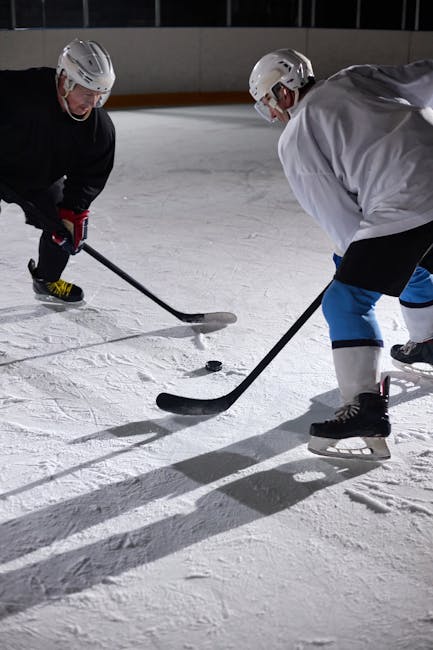
Hockey is a fast-paced, physically demanding sport that requires players to harness strength, agility, and endurance. To thrive on the ice, focusing on core stability is paramount. A strong core enhances our balance, improves our skating technique, and allows us to engage effectively with opponents. As players, we should recognize that the core serves as the foundation from which all movements are executed. Whether we are shooting, passing, or defending, a well-conditioned core will amplify our performance.
Article Summary
The best core exercises for hockey players involve a combination of stability, strength, and functional training. By incorporating exercises that target both the anterior and posterior core muscles, we can significantly improve our on-ice performance, enhance our balance, and reduce the risk of injuries.
Importance of Core Strength in Hockey
When we think of athleticism in hockey, core strength often takes a back seat to leg power or upper body strength. However, the core plays a critical role in how we execute virtually every movement on the ice. Without a solid core, we may find ourselves off-balance, unable to react quickly to opponents, or even at greater risk of injury.
Our core consists of more than just abs; it encompasses a complex network of muscles that include the abdominal muscles, lower back, pelvic floor, and diaphragm. This interconnected system helps stabilize our body during dynamic movements.
Having a strong core leads to improved posture, better coordination, and increased flexibility. When we maintain proper posture during skating or shooting, we not only look more fluid, but we also make our movements more effective. Additionally, a stable core allows us to pivot quickly, which is crucial for maneuvering around opponents or adjusting our position defensively.
Key Core Exercises for Hockey Players
To achieve the benefits of core strength, we can incorporate the following exercises into our training regimen. Each exercise targets different areas of the core while promoting overall functional strength.
Plank Variations
The plank is a classic core exercise that strengthens the entire core area.
To maximize the benefits for hockey players, consider these variations:
Russian Twists
This exercise promotes rotational strength, which is essential when shooting or passing.
To perform:
1. Sit on the ground with your knees bent.
2. Lean back slightly while keeping your back straight.
3. Hold a weight or medicine ball with both hands and twist your torso to one side, then to the other.
This exercise not only engages our core but also improves our ability to generate power through our trunk.
Medicine Ball Slams
Using a medicine ball for slams provides a dynamic way to build explosive strength in the core, which is beneficial during quick skating movements and shots.
To execute:
1. Stand with feet shoulder-width apart, holding the medicine ball overhead.
2. Use your core to slam the ball down to the ground as hard as you can.
3. Catch the ball on the rebound and repeat.
This powerful movement will not only enhance your core strength but also increase your overall power output.
Dead Bug
This exercise focuses on maintaining stability while moving the limbs, reinforcing what is known as “anti-extension,” which is critical in preventing lower back injuries.
To perform:
1. Lie on your back with your arms extended towards the ceiling and your knees bent at 90 degrees.
2. Slowly lower one arm and the opposite leg towards the floor without arching your back.
3. Return to the starting position and alternate sides.
By integrating the dead bug into our routine, we ensure that our core can stabilize us during complex movements.
Single-Leg Balance Exercises
These are crucial for enhancing our stability on the ice, helping us maintain balance while skating, shooting, or engaging with opponents.
Try these variations:
Conclusion
Incorporating these core exercises into our workout routine can have a significant impact on our hockey performance. A stronger core not only enhances our stability and balance, but it also helps prevent injuries, enabling us to skate harder, shoot faster, and play smarter. By consistently integrating these exercises into our training, we can elevate our game to newfound heights, ensuring we’re always at our best on the ice. So, let’s get to work!