
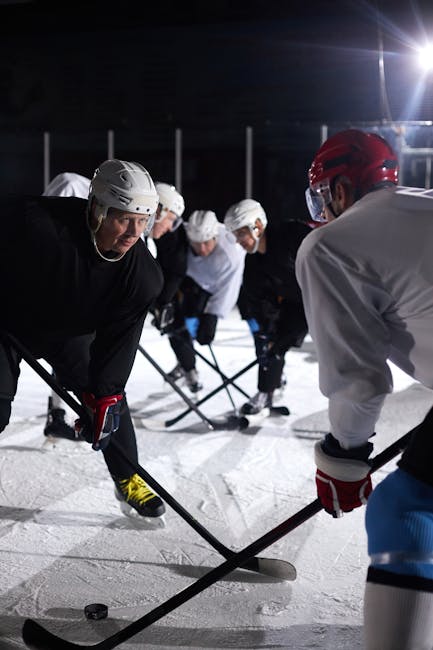
When it comes to hockey, performance on the ice hinges significantly on our physical capabilities. With rapid skating, sharp turns, and the need for explosive strength, understanding which muscles are crucial can greatly enhance overall gameplay. Identifying these key muscle groups allows us to tailor our training, improve stamina, and reduce injury risk.
Article Summary
To excel in hockey, the most vital muscles include those in the legs, core, and upper body. The quadriceps, hamstrings, gluteal muscles, along with the abdominal and back muscles, work in concert to provide the strength, agility, and endurance necessary for optimal ice performance.
Key Muscle Groups in Hockey
Each hockey player relies on a unique combination of muscle strength and endurance, which directly affects how we perform. In this section, we will delve deeper into the primary muscle groups that contribute to our on-ice prowess.
Leg Muscles
The foundation of any athlete’s performance lies in the legs, and for hockey players, this is especially true. Our legs propel us forward, allow for sharp turns, and support maintaining balance during intense shifts of momentum.
- Quadriceps: These key muscles, located at the front of the thigh, are essential for skating speed and power. They help extend the knee and support sudden starts and stops.
- Hamstrings: Found at the back of the thigh, the hamstrings play a crucial role in flexing the knee and staving off injuries that can arise from overextension.
- Gluteal Muscles: Our glutes not only help with explosive skating but also contribute to stability and posture. Strong glutes aid in strategy and technique when battling opponents on the puck.
The combination of these muscle groups lays a solid foundation for agility, allowing us to maneuver effectively during the heat of a game.
Core Muscles
The core is often overlooked, yet its importance cannot be overstated. A strong core contributes to overall stability, balance, and power transfer during athletic movements.
The core includes:
- Abdominal Muscles: These muscles maintain good posture and body alignment on and off the puck, which is crucial during movements such as skating and shooting.
- Obliques: Located on the sides of the abdomen, these muscles support lateral movement, essential for dodging defenders or changing direction quickly.
- Lower back muscles: A vital component of the core, stronger lower back muscles can greatly reduce the risk of injuries while providing the backbone for powerful skating and loading during shooting.
Strengthening our core not only enhances our stability but also aids in executing complex plays with ease.
Upper Body Muscles
While we often think of skating power as strictly a lower-body endeavor, strong upper body muscles are equally vital. Upper body strength is key for shooting, passing, and controlling the puck during tight situations.
- Shoulder Muscles: These muscles support the movement of the arms, critical for shooting accuracy and defense against checking.
- Chest Muscles: Strong pectoral muscles enhance our ability to shoot and pass with force, allowing us to engage in strategic plays.
- Back Muscles: Engaging the back muscles contributes to overall upper body strength and stability while allowing us to maintain control and balance.
When we combine robust upper body strength with lower body and core power, we create a holistic athlete capable of meeting the demanding challenges of hockey.
Training Approaches to Develop Key Muscles
To translate our understanding of these essential muscles into athletic achievement, we need to adopt focused training regimens. Here are some strategies we could implement:
Strength Training
Incorporating strength training exercises into our routine can dramatically enhance key muscle group development. This includes:
- Squats and Deadlifts: Excellent for building leg and core strength.
- Bench Press and Pull-ups: Crucial for upper body power and endurance.
- Core Exercises: Planks and Russian twists to enhance core stability.
Agility Workouts
Hockey is a fast-paced sport that requires swift direction changes. Incorporating agility drills will enhance our responsiveness on the ice. We might consider cone drills, ladder drills, and plyometrics to build quickness and foot speed.
Endurance Training
Finally, skating endurance is imperative for maintaining peak performance throughout the game. Incorporating interval training and sustained skating practice can strengthen our cardiovascular system, allowing us to thrive in the latter parts of a match.
Conclusion
In hockey, the interplay of various muscle groups is paramount to performance. By focusing on strengthening the legs, core, and upper body, we can enhance our skating, shooting, and overall gameplay. Building programs that address these key muscle groups is essential, fostering not only strength but also resilience against injuries. As we commit to this journey, we are paving the way for significant improvements on the ice, and ultimately, a thrilling hockey experience.